
Patient Education
Dental implants
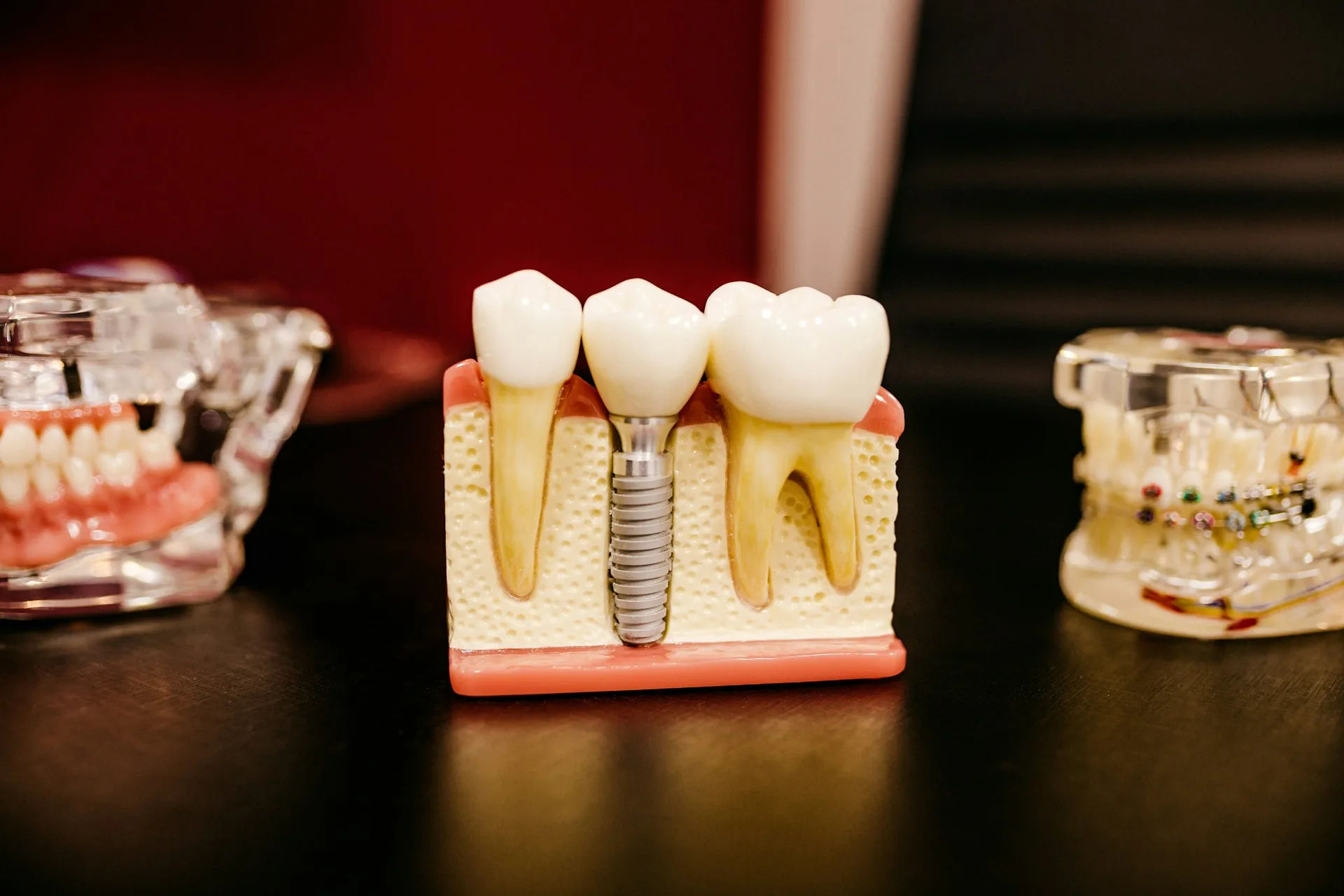
A dental implant is a small titanium post that replaces the root of a missing tooth. Placed into the jawbone, it fuses with the bone over time and becomes a permanent foundation for a crown, bridge, or full-arch restoration — replacing missing teeth in a way that looks, feels, and functions like natural teeth.
Because implants integrate with living bone, they also help preserve the jaw. When a tooth is lost, the bone that once supported it begins to shrink; an implant stimulates that bone the way a natural root would, protecting both function and facial structure.
Why choose an implant?
Protects the jawbone
Stimulates the bone like a natural root, slowing the bone loss that follows tooth loss.
Stands on its own
Unlike a traditional bridge, an implant does not rely on grinding down the neighboring healthy teeth.
Built to last
With healthy gums and good care, implants are a long-term — often lifelong — solution.
Stable and comfortable
Implant-supported teeth do not slip or shift the way removable dentures can.
Restores full function
Eat, speak, and smile with confidence and near-natural biting force.
Natural appearance
The final restoration is matched to your surrounding teeth for a seamless result.
The implant process, step by step
- 1
Evaluation & planning
A thorough exam with 3D CBCT imaging maps the bone, nerves, and sinus so placement is precise and predictable.
- 2
Implant placement
The titanium implant is placed into the jawbone in a focused, minimally invasive procedure, usually under local anesthesia.
- 3
Healing & integration
Over several months the bone bonds to the implant — a process called osseointegration — creating a stable foundation.
- 4
Restoration
Your restoring dentist attaches a custom crown, bridge, or implant-supported denture, completing the tooth in form and function.
Are you a candidate?
Most adults who are missing teeth are candidates for implants. A consultation confirms whether implants are right for you, and what — if any — preparation is needed first. See more about dental implants in Beverly Hills.
- One or more missing teeth, or teeth that cannot be saved
- Healthy gums, or gum disease that has been brought under control first
- Enough jawbone to support an implant — or a plan to rebuild it with grafting
- A commitment to good oral hygiene and routine professional care
- General health that allows for a minor surgical procedure and normal healing
What if there isn't enough bone?
Years of missing teeth, gum disease, or trauma can leave too little bone to anchor an implant. This is common — and rarely a dead end.
Procedures such as bone grafting, ridge augmentation, and sinus elevation rebuild the foundation so that implants become possible, even in cases that were once considered too difficult.
For referring doctors
Refer a complex implant case
From single-unit placement to full-arch rehabilitation and grafting for deficient sites, surgical steps are sequenced in step with your restorative plan to protect continuity of care.
This information is provided for educational purposes and is not a substitute for a professional evaluation. Diagnosis and treatment should always be determined by a qualified dental professional based on your individual condition.