
Gum Disease: Symptoms, Causes and Treatments

Periodontics · Patient Education
What is gum disease?
Gum (periodontal) disease is a bacterial infection of the tissues that surround and support your teeth. It begins quietly as inflammation of the gums and, left untreated, can progress to destroy the bone that holds teeth in place — making it the leading cause of tooth loss in adults.
A periodontist is the dental specialist focused on the prevention, diagnosis, and treatment of gum disease and on the placement of dental implants. Early evaluation is what makes the difference: caught early, gum disease is highly treatable, and the damage can often be stopped before teeth and bone are lost.
Gum disease symptoms
Gum disease is often silent, meaning symptoms may not appear until the advanced stages. However, warning signs of gum disease include the following:
- Red, swollen, or tender gums, or other pain in your mouth
- Bleeding while brushing, flossing, or eating hard food
- Gums that are receding or pulling away from the teeth, causing the teeth to look longer than before
- Loose or separating teeth
- Pus between your gums and teeth
- Sores in your mouth
- Persistent bad breath
- A change in the way your teeth fit together when you bite
- A change in the fit of partial dentures
Causes & risk factors
Gum disease starts with dental plaque — a sticky film of bacteria that constantly forms on the teeth. When plaque is not removed by daily brushing and flossing and regular professional cleanings, it hardens into tartar and the bacteria trigger an inflammatory response that damages the gums and, over time, the underlying bone.
Several factors can increase your risk or accelerate how quickly the disease progresses:
- Inadequate plaque control and irregular professional cleanings
- Smoking and tobacco use
- Diabetes and other systemic inflammatory conditions
- Genetic susceptibility and family history
- Hormonal changes (pregnancy, menopause)
- Certain medications that reduce saliva or cause gum overgrowth
- Clenching and grinding, which add stress to compromised support
Types of gum disease
Gingivitis
Gingivitis is the mildest form of periodontal disease. It causes the gums to become red, swollen, and bleed easily. There is usually little or no discomfort at this stage. Luckily, gingivitis is reversible with professional treatment and good at-home oral care.
Periodontitis
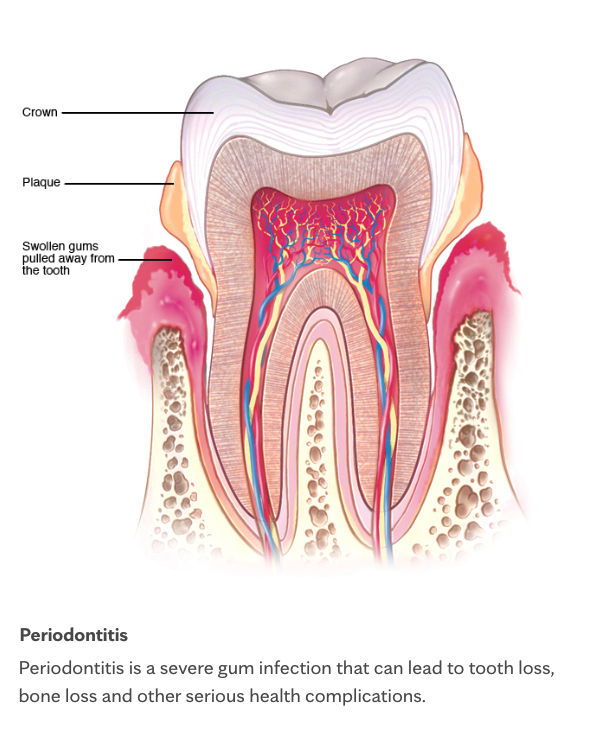
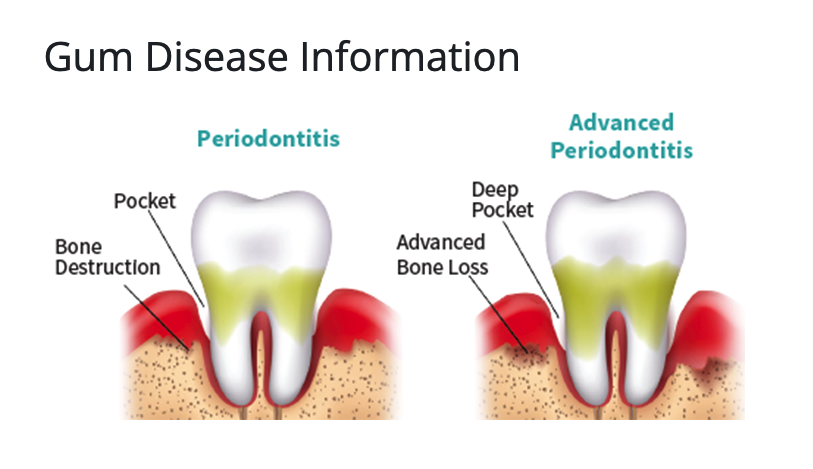
Untreated gingivitis can advance to periodontitis. With time, plaque can spread and grow below the gum line. Toxins produced by the bacteria in plaque irritate the gums and stimulate a chronic inflammatory response in which the body essentially turns on itself, and the tissues and bone that support the teeth are broken down and destroyed. Gums separate from the teeth, forming pockets between the teeth and gums that can become infected. As the disease progresses, the pockets deepen and more gum tissue and bone are destroyed. Eventually, teeth can become loose and may fall out or need to be removed.
Periodontitis diagnosis is typically classified by stage and grade. After your periodontist conducts a thorough assessment of your unique case, he or she may assign a stage ranging from initial to severe that describes the acuteness of disease. Additionally, your periodontist may assign a grade which communicates the rate of disease progression and anticipated response to treatment.
Treatment options
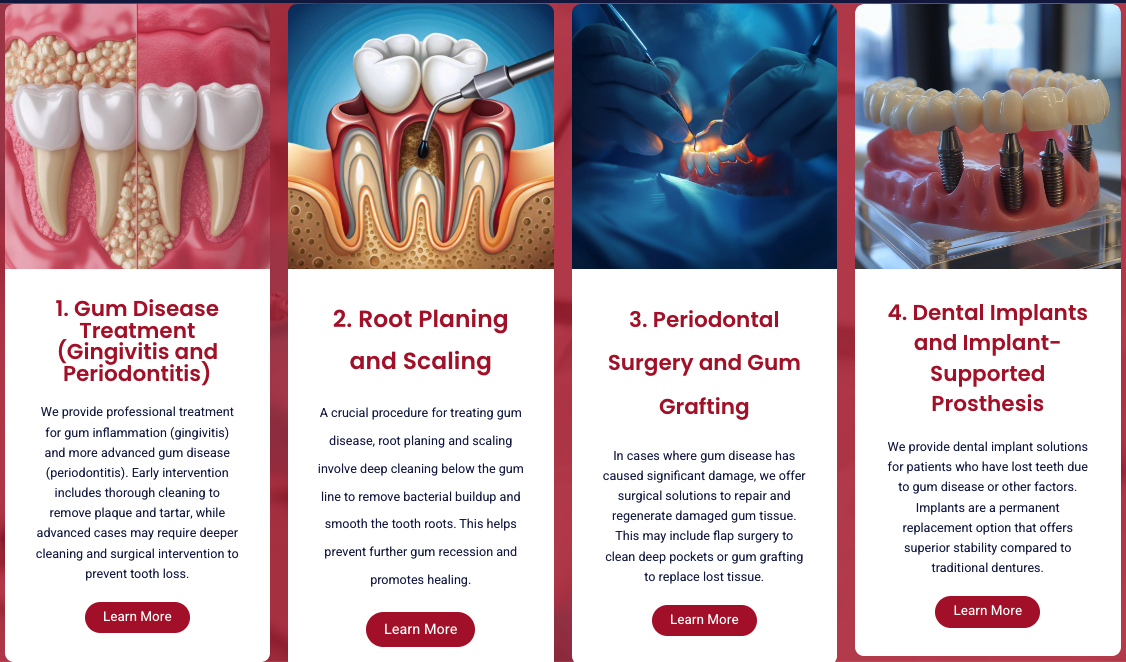
Treatment is matched to the stage of disease. Gingivitis can usually be reversed with a professional cleaning and improved home care. Once periodontitis has set in, the goal is to control the infection, reduce pocket depth, and rebuild lost support — beginning with non-surgical scaling and root planing and, where needed, progressing to surgical and regenerative procedures.
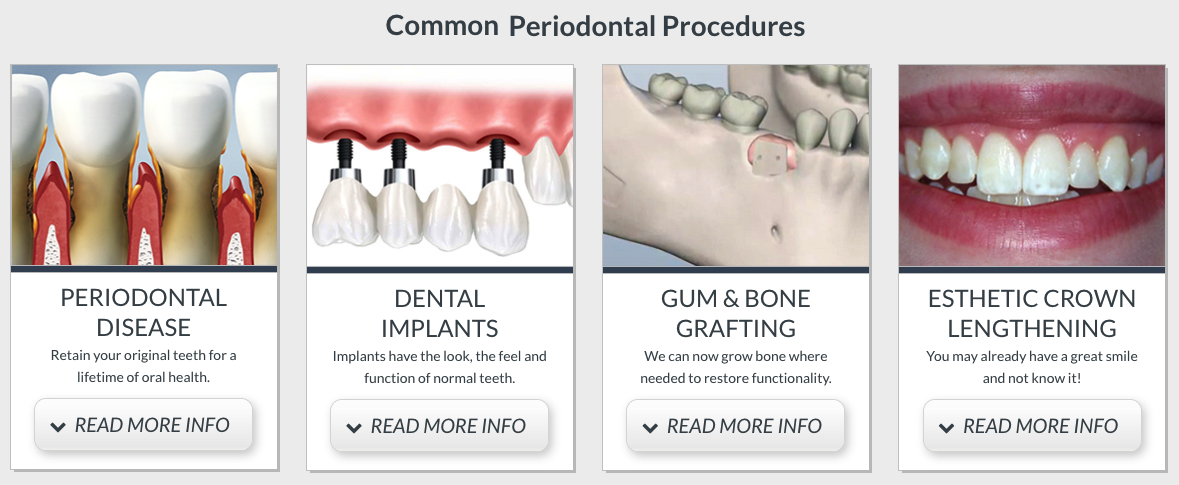
For severe cases where teeth have already been lost, dental implants and implant-supported restorations can restore function and appearance. Explore the full range on the services page.

Concerned about your gums?
Bleeding gums, recession, or loose teeth shouldn't be ignored. A focused periodontal evaluation identifies the stage of disease and the most conservative path to protect your teeth and bone.
This information is provided for educational purposes and is not a substitute for a professional evaluation. Diagnosis and treatment should always be determined by a qualified dental professional based on your individual condition.